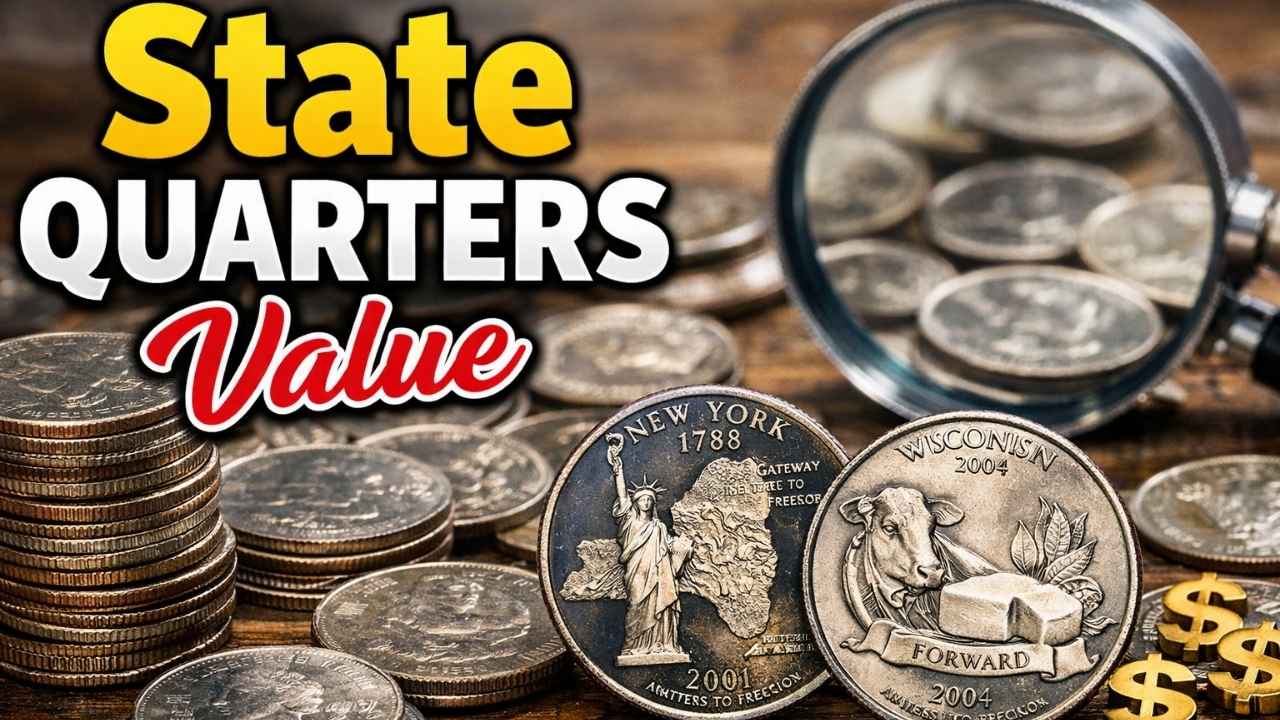
State Quarters Value in 2026: When the United States Mint launched the 50 State Quarters Program in 1999, few people expected it to become one of the most successful coin programs in American history. By the time the final state quarter was released in 2008, millions of Americans had started checking their change more closely. Fast forward to 2026, and those same quarters are still sparking curiosity. Many collectors now ask the same question: how much are state quarters really worth today?
After 11 years of closely following the market, attending coin shows, studying grading trends, and tracking auction results, I can confidently say that most state quarters are still worth face value. But certain rare finds can be worth far more. Understanding which coins matter and why makes all the difference.
Why Most State Quarters Are Still Worth 25 Cents
The reality is simple. The 50 State Quarters Program produced billions of coins. States like Virginia, California, and Florida had mintages reaching into the hundreds of millions. Because of this massive production, circulated coins are extremely common.
If a quarter has been used in everyday transactions and shows wear, scratches, or dull surfaces, it is typically worth just 25 cents. Even in 2026, dealers will rarely pay a premium for worn examples unless there is something unusual about them.

However, condition changes everything. Uncirculated coins that were never used in commerce, especially those graded MS67 or higher by professional grading services, can command significant premiums.
Condition Is King in 2026
One lesson I have learned over the past decade is that modern coin collecting revolves around condition. A 2000 Massachusetts quarter in average shape is worth face value. The same coin in pristine, near perfect condition can sell for $50 or more if it receives a top tier grade.
Professional grading services such as Professional Coin Grading Service and Numismatic Guaranty Company play a major role in determining value. In 2026, registry set competition remains strong, and collectors are willing to pay high prices for the finest known examples.
Coins graded MS68 or MS69 are especially valuable because so few survive without microscopic flaws. Even a small nick can drop the value dramatically.

The Most Valuable State Quarter Errors
Error coins are where things get exciting. Over the years, several state quarters have become famous for minting mistakes. These errors often sell for hundreds or even thousands of dollars depending on severity and condition.
One of the most talked about examples is the 2004 Wisconsin quarter featuring an extra leaf on the ear of corn. Some coins show an additional high leaf, while others show a low leaf. These were likely caused by die alterations or damage. In 2026, high grade examples can sell anywhere from $150 to over $1,000.
Another well known piece is the 1999 Delaware quarter struck on an experimental planchet. While extremely rare, when authenticated, these coins have sold for several thousand dollars at auction.
Off center strikes, double dies, and coins struck on wrong planchets also attract serious interest. Over 11 years of collecting, I have noticed that verified errors consistently outperform standard uncirculated coins in long term value growth.
Silver Proof State Quarters
Not all state quarters were made for circulation. The United States Mint also produced special proof versions, including 90 percent silver editions sold directly to collectors.
Silver proof sets from 1999 through 2008 contain higher intrinsic metal value. With silver prices fluctuating in 2026, these coins typically carry a base value tied to bullion content. However, collectors often pay additional premiums for complete sets in original government packaging.
While individual silver proof quarters may sell for $5 to $15 depending on silver prices and condition, complete high quality sets can bring several hundred dollars.
Key Dates and Tough Mint Marks
Although no state quarter is truly rare in the traditional sense, certain combinations are tougher in top grades. For example, some Philadelphia Mint issues from the early 2000s are surprisingly difficult to find in MS68 condition.

The 2003 Missouri quarter and 2001 New York quarter have both shown strong auction results in elite grades. Again, the value difference between MS65 and MS68 can be dramatic.
Collectors building registry sets often compete aggressively for the highest graded coins. That competition drives up prices far beyond what casual collectors might expect.
Market Trends After 11 Years of Watching
When I first began seriously tracking state quarter values more than a decade ago, excitement was cooling down from the original program release. Prices for common uncirculated rolls had dropped. Many people assumed the series had peaked.
What happened instead was market stabilization. Ordinary coins remained common, but top population coins and major errors steadily gained attention. The market matured. Instead of hype, value became driven by rarity within condition grades.
By 2026, the state quarter market is steady and predictable. There are fewer sudden spikes, but strong examples consistently sell well. Serious collectors now focus on quality rather than quantity.
Are State Quarters a Good Investment in 2026
From a pure investment standpoint, state quarters should not replace traditional assets. However, selective buying can be rewarding. The key is to focus on three areas:
High grade certified coins with low population numbers
Major verified mint errors
Complete silver proof sets in original packaging
Random rolls from the bank are unlikely to produce dramatic profits unless you discover an error. Careful inspection and patience are essential.
Over 11 years, I have found that knowledge matters more than luck. Understanding grading standards, tracking auction records, and buying the best quality you can afford leads to better long term results.
How to Check If Your State Quarter Is Valuable
Start by examining condition. Look for sharp details, strong luster, and minimal marks. Next, check the mint mark located near George Washington’s ponytail. Philadelphia coins have no mint mark, Denver coins display a D, and proof coins from San Francisco show an S.
Then inspect the coin for unusual features such as doubling, off center strikes, or design anomalies. If something appears unusual, consider having it evaluated by a reputable grading service.
Avoid cleaning coins. Cleaning almost always reduces value. Even a rare error can lose significant worth if improperly handled.
Final Thoughts on State Quarters in 2026
State quarters continue to hold a special place in American coin collecting. They introduced an entire generation to the hobby and remain widely collected today.
While most are still worth 25 cents, exceptional examples prove that modern coins can carry real value. After more than a decade of collecting insights, one truth stands out clearly. Condition, rarity within grade, and verified errors determine price far more than age alone.
If you approach the series with patience and curiosity, state quarters can still offer exciting discoveries in 2026. Sometimes the next valuable coin is already sitting quietly in your pocket change, waiting to be noticed.