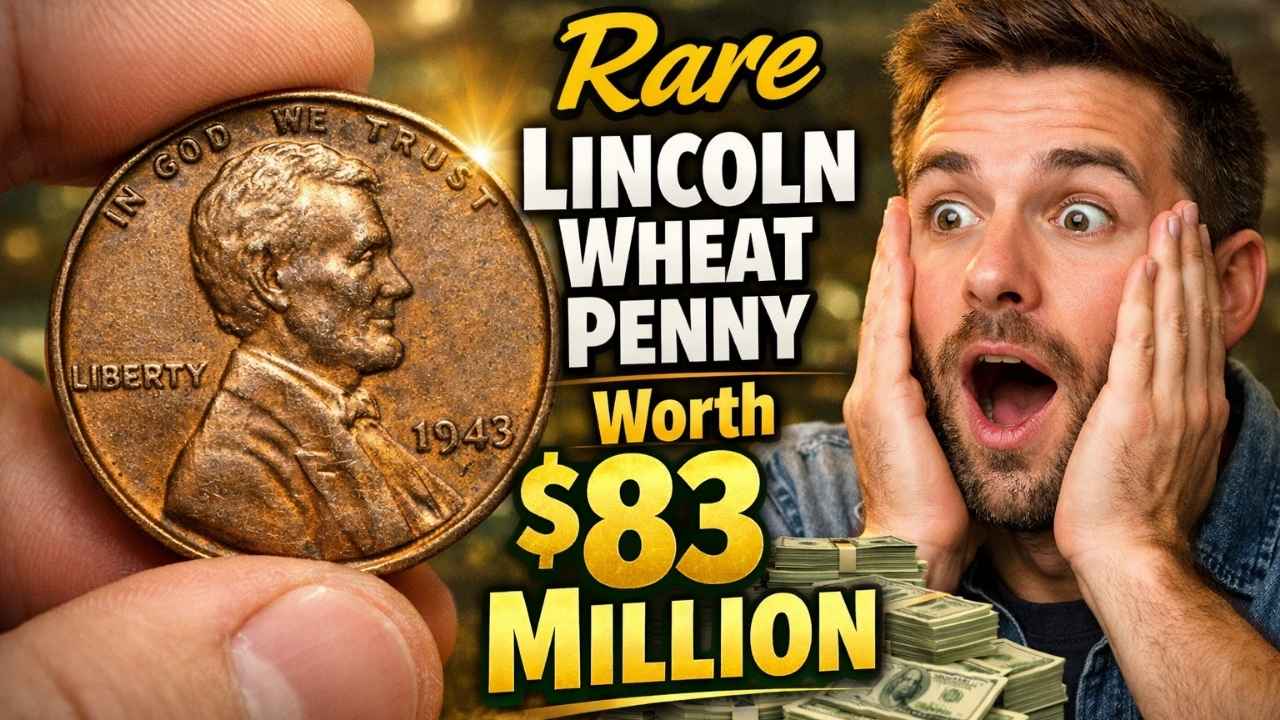
Rare Lincoln Wheat Penny Worth $83 Million: The Lincoln Wheat Penny has captured the imagination of collectors and casual hobbyists for more than a century. Minted between 1909 and 1958, it was the first American coin to feature a real person, Abraham Lincoln, on its obverse. Its reverse design, with two wheat stalks framing the words “One Cent,” gave the coin its popular nickname. Over time, these pennies became symbols of American history, artistry, and nostalgia.
The Origins of the Design
Victor David Brenner, a Lithuanian-born engraver, designed the Lincoln Wheat Penny. His portrait of Lincoln was inspired by photographs taken by Mathew Brady. The coin was released in 1909 to mark the centennial of Lincoln’s birth. Collectors immediately took notice, and the coin’s popularity has never waned. The wheat stalks on the reverse were meant to symbolize prosperity and growth, tying the coin to the agricultural roots of the nation.
Rare Varieties That Command High Value
While most Wheat Pennies are worth only a few cents today, certain rare varieties can fetch thousands of dollars. These include:
- 1909-S VDB: The San Francisco mint produced fewer than 500,000 coins with Brenner’s initials “VDB” on the reverse. This coin is one of the most sought-after by collectors.
- 1914-D: With only about one million minted in Denver, this penny is rare in high grades.
- 1922 No D: A minting error resulted in pennies without the Denver mint mark, making them highly collectible.
- 1943 Copper Penny: During World War II, pennies were made of steel to save copper for the war effort. A few copper planchets were mistakenly used, creating one of the most famous error coins in U.S. history.
- 1955 Double Die: This penny shows a dramatic doubling of the date and lettering, making it one of the most visually striking error coins.
The Myth of the $83 Million Penny
Stories have circulated online claiming that a Lincoln Wheat Penny could be worth $83 million. In reality, no Wheat Penny has ever sold for anywhere near that amount. The most valuable examples have sold for tens of thousands of dollars, with the rarest varieties occasionally reaching six figures at auction. The $83 million figure is more of a viral myth than a numismatic fact, but it has fueled public interest in checking pocket change for hidden treasures.

How to Identify Valuable Wheat Pennies
Collectors look for several key features when evaluating a Wheat Penny:
- Mint Mark: Located below the date, the mint mark indicates where the coin was produced. “D” stands for Denver, “S” for San Francisco, and no mark means Philadelphia.
- Condition: Coins are graded on a scale from Poor to Mint State. Uncirculated coins with sharp details are worth far more than worn examples.
- Errors: Double dies, off-center strikes, and missing mint marks can dramatically increase value.
- Year of Issue: Certain years are rarer than others, especially those with low mintage numbers.
The Role of Coin Grading
Professional grading services such as PCGS and NGC evaluate coins and assign them grades based on condition. A coin graded MS-65 or higher can be worth exponentially more than the same coin in circulated condition. Grading provides assurance to buyers and sellers, making it a crucial part of the numismatic market.

Collecting Wheat Pennies Today
For many collectors, Wheat Pennies are an entry point into the world of numismatics. They are affordable, widely available, and steeped in history. Beginners often start by assembling a complete set from 1909 to 1958, while advanced collectors hunt for rare varieties and high-grade examples. Coin shows, online auctions, and local dealers provide opportunities to buy, sell, and trade.
The Cultural Legacy of the Wheat Penny
Beyond its monetary value, the Lincoln Wheat Penny holds cultural significance. It represents a period of American history marked by industrial growth, wartime sacrifice, and postwar prosperity. For older generations, finding a Wheat Penny in circulation evokes childhood memories. For younger collectors, it offers a tangible connection to the past.
Conclusion
The Lincoln Wheat Penny may not be hiding an $83 million fortune in your pocket, but it remains one of the most beloved coins in American history. Rare varieties such as the 1909-S VDB, 1943 Copper Penny, and 1955 Double Die can command impressive prices, while common examples still carry sentimental and historical value. Whether you are a seasoned collector or someone who simply enjoys the thrill of discovery, the Wheat Penny continues to inspire fascination more than a century after its debut.